
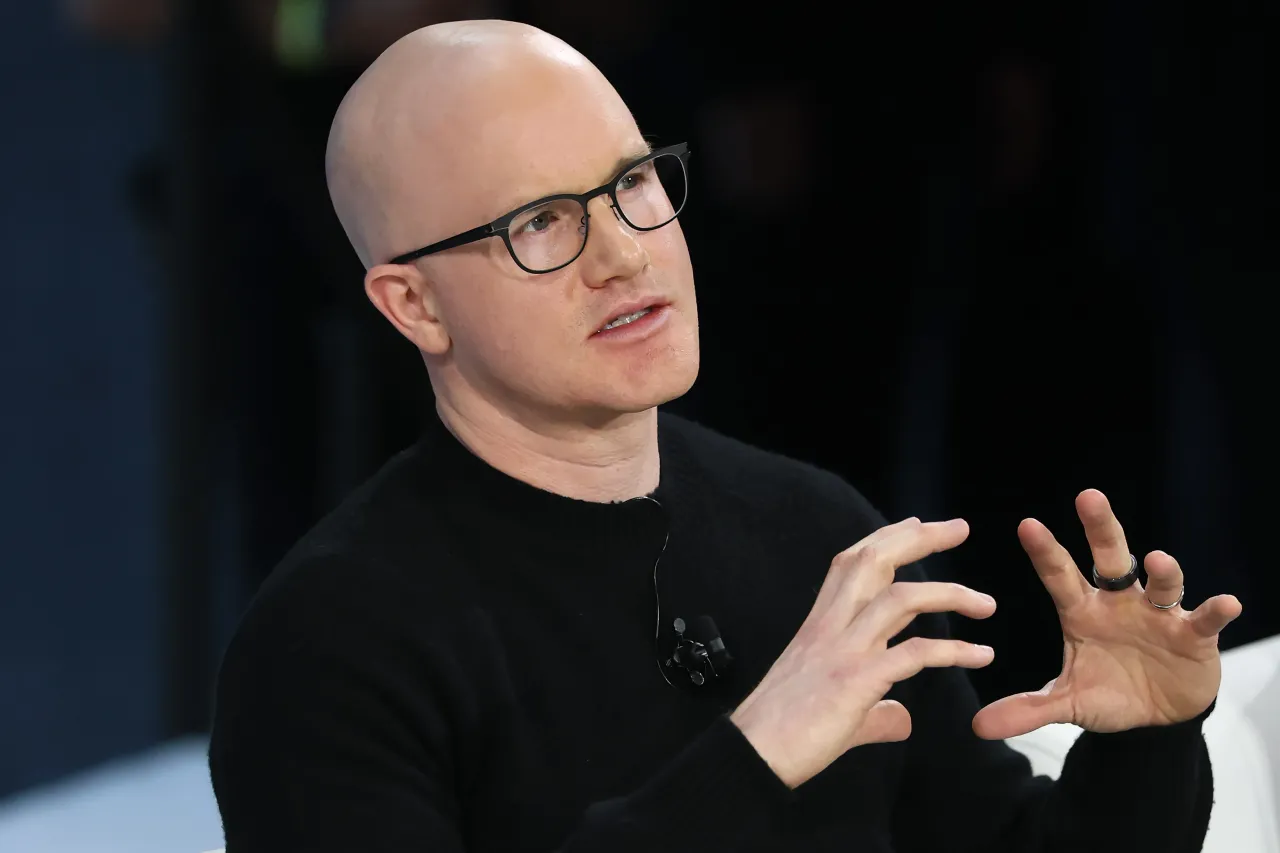
During a pivotal earnings call on February 12, 2026, Coinbase CEO Brian Armstrong sought to reassure investors by highlighting a significant trend in user behavior: a surge in retail “dip buying.” Despite the exchange reporting a surprise 666-million-dollar loss for the fourth quarter—largely due to unrealized impairment charges on its own crypto holdings—Armstrong noted that active participants are not fleeing the market. Instead, the company’s internal data shows that retail traders and long-term “HODLers” have significantly increased their accumulation of Bitcoin and Ethereum as prices retreated from their 2025 highs. Chief Financial Officer Alesia Haas echoed this sentiment, stating that while the year has begun with heightened volatility and a general “exodus” of institutional capital, those who remain in the ecosystem are viewing the current drawdown as a generational entry point. This “buy the dip” mentality has provided a critical floor for trading volumes, even as the exchange’s stock (COIN) hit a two-year low earlier in the week.
Diversification and the Rise of On-Chain Prediction Markets
In a strategic shift to stabilize revenue, Armstrong revealed that Coinbase has successfully diversified beyond traditional spot trading into higher-margin areas like prediction markets and decentralized finance (DeFi) services. This move follows the massive success of platforms like Polymarket, which dominated the news cycle during the 2024 and 2025 election periods. Armstrong noted that Coinbase’s new prediction market features are attracting a different class of “machine-native” traders, contributing to the 550 million to 630 million dollars in subscription and services revenue projected for the first quarter. By allowing users to hedge geopolitical risks or bet on economic outcomes directly within their Coinbase wallets, the exchange is attempting to decouple its financial health from the singular movements of Bitcoin’s price. This diversification is seen as essential for surviving the “cyclical nature” of the crypto industry, which Armstrong reminded shareholders is “never as good or as bad as it seems” in the heat of a sell-off.
Balancing Strategic Insider Sales with Institutional Rebalancing
While Armstrong projected public optimism about the retail sector’s resilience, his personal financial activity has drawn scrutiny from market observers. Recent filings show that the CEO has sold more than 550 million dollars in Coinbase stock over the past year, including a 101-million-dollar block on January 5, 2026. While these sales were conducted under a pre-arranged Rule 10b5-1 trading plan to minimize insider trading concerns, the timing—coinciding with a 60% drop in the stock’s value—has fueled debate over leadership’s long-term conviction. Nonetheless, the exchange’s institutional infrastructure continues to see significant traffic, with over 237 billion dollars in institutional trading volume reported in the last quarter. As Coinbase navigates this “bear phase,” the focus remains on capturing the “capitulation” liquidity and preparing for the next structural recovery. For Armstrong, the current market stress is a necessary “flush” that clears out speculative froth and leaves behind a more sophisticated, utility-driven user base ready for the eventual return of institutional risk appetite.
