
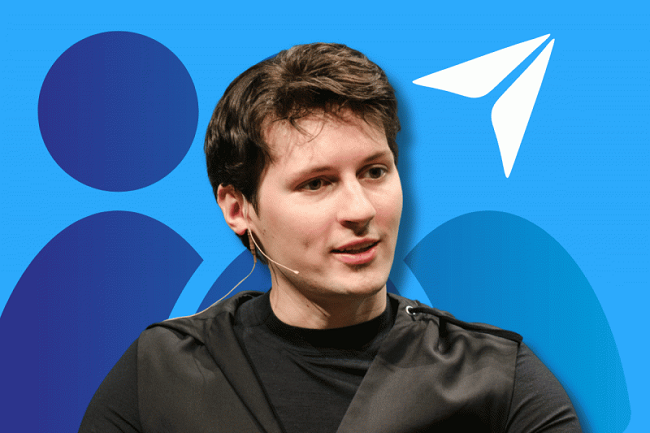
On February 24, 2026, the Russian Federal Security Service (FSB) officially opened a criminal investigation into Pavel Durov, the billionaire founder of the Telegram messaging app, on charges of “abetting terrorist activities.” The probe, confirmed by state-run media outlets including Rossiyskaya Gazeta and Komsomolskaya Pravda, marks a dramatic escalation in the Kremlin’s long-standing effort to exert control over the platform, which remains one of the few relatively unmonitored communication tools available to the Russian public. Officials allege that Telegram has become a primary instrument for foreign intelligence agencies and “extremist organizations” to coordinate sabotage, arson attacks on military recruitment offices, and political assassinations within Russian territory. Citing FSB materials, the investigation claims that the app’s refusal to share encryption keys or comply with over 150,000 content removal requests from the regulator Roskomnadzor has directly facilitated over 150,000 crimes since 2022. Durov, who currently resides in Dubai and holds French and Emirati citizenship, responded to the news by labeling the probe a “sad spectacle of a state afraid of its own people,” accusing Moscow of fabricating pretexts to suppress free speech.
Military Friction and the Drive Toward State-Controlled Alternatives
The timing of the investigation is particularly significant given the widespread use of Telegram by Russian military personnel and pro-war bloggers on the front lines in Ukraine. While Digital Development Minister Maksud Shadayev recently warned that foreign intelligence could be reading the messages of Russian soldiers via the app, the decision to target Durov has triggered a rare wave of pushback from within the Russian military establishment. Many frontline correspondents have warned that restricting Telegram without a viable, secure alternative would severely derail tactical communications and logistical coordination. In response, the Kremlin has intensified its promotion of “Max,” a state-backed “national messenger” that critics describe as a centralized surveillance tool designed to replicate the functionality of China’s WeChat. Adoption of Max has remained slow, prompting authorities to implement “traffic degradation” on Telegram, which reportedly slowed the app’s performance by over 55 percent in late February. By criminalizing Durov’s refusal to cooperate, the government is signaling that it is willing to risk military operational friction in order to achieve total dominance over the domestic information space.
Navigating the Geopolitical Web of Regulatory and Judicial Pressure
The Russian probe adds another layer of legal complexity for Durov, who is still navigating a pending judicial case in France following his 2024 arrest in Paris. While the French investigation focuses on failure to moderate child sexual abuse material and fraudulent transactions, the Russian case is framed almost entirely through the lens of national security and counter-terrorism. This dual-front legal battle highlights the unique challenges faced by “ultra-libertarian” tech founders in an era where digital platforms have become primary battlefields for geopolitical influence. International human rights organizations have expressed concern that the Russian investigation is a thinly veiled attempt to force Telegram into granting the FSB backdoor access to private user data, a move that would effectively end the app’s reputation for privacy. As the 2026 midterm cycle approaches and global tensions remain high, the fate of Pavel Durov and his platform serves as a critical test case for the survival of independent, borderless communication in a world increasingly defined by digital sovereignty and state-led “hardening” of the internet.
