
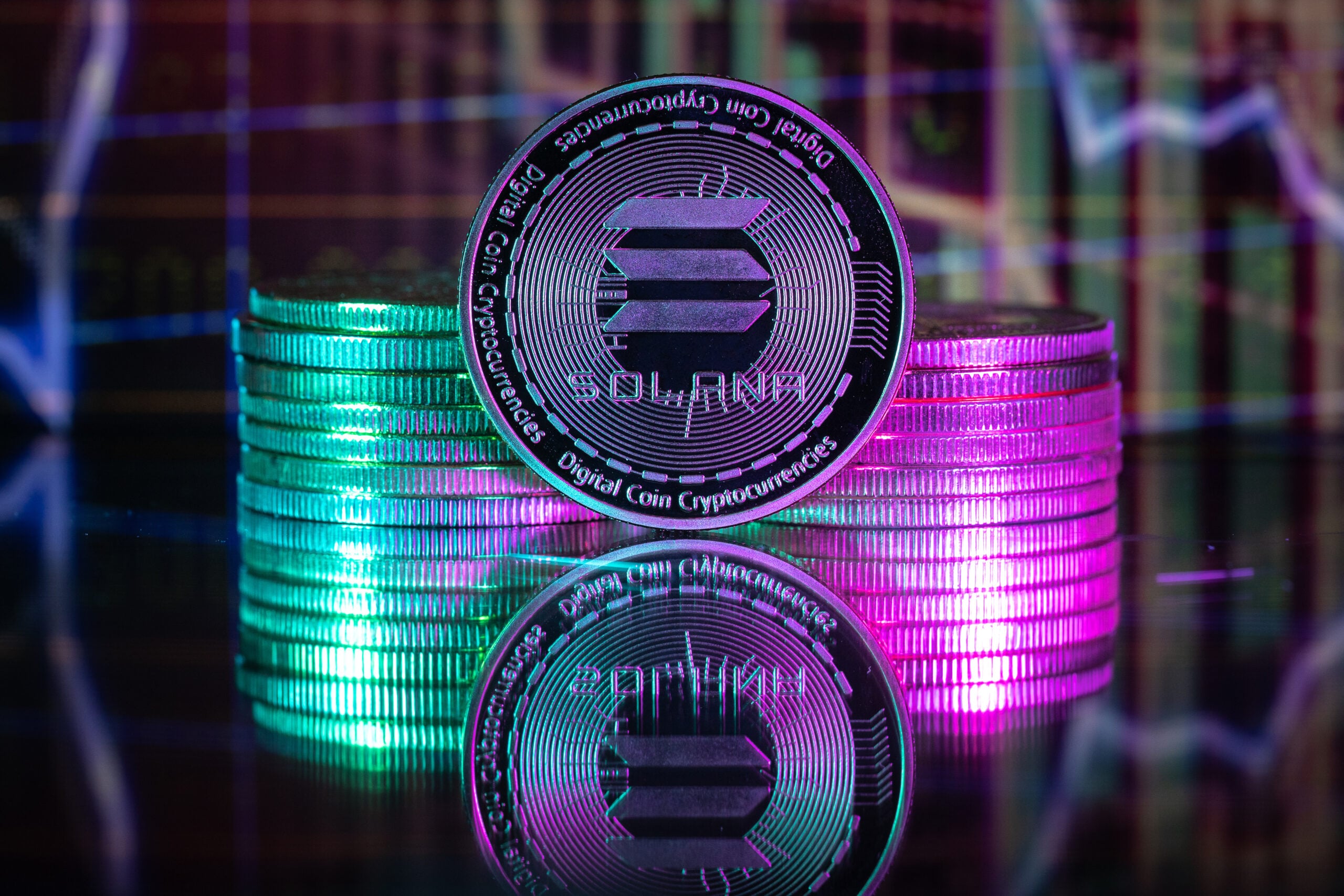
The price of Solana is more than just a number. It shows how confident the market is in Solana’s blockchain ecosystem right now, based on factors such as adoption, utility, developer activity, and the broader economic environment. It also shows how much investors think a high-performance, scalable blockchain is worth. You can measure market sentiment by tracking the Solana price against the USD. You can also review your portfolio to see how changes impact SOL’s real-world value.
Solana: A High-Performance Blockchain
Solana supports smart contracts and is made to handle a lot of transactions quickly and cheaply. It can handle thousands of transactions per second and has lower fees than many older blockchains. The coin is quickly becoming popular in the blockchain world because it is cheap, and transactions happen quickly. Solana is a strong competitor in the crypto market because of its developing ecosystem and improving technology. One crypto expert said, “Solana is a high-performance public blockchain platform that provides fast transaction speeds and low fees for developers and users.”
Solana is a layer-1 blockchain designed for scalability. Its goal is to provide developers with a platform to build decentralized applications without worrying about performance issues such as high fees or limited transaction capacity. All of these factors make SOL the primary currency for a blockchain that hosts decentralized applications (dApps), NFTs, and DeFi. This gives SOL both usefulness and demand.
What are Blockchains?
You need to understand blockchains, as cryptocurrencies rely on them. A blockchain is a database that spreads across a network of computer nodes. It can securely and decentralize transaction records, making it ideal for cryptocurrencies. However, it can serve purposes beyond digital currencies. Blockchains can also make data in various fields unchangeable, preventing tampering.
Blockchain makes it less necessary to rely on trusted third parties, like auditors or people, who can add costs and mistakes. Blockchain systems try to make a real, tamper-proof record of transactions with as few mistakes as possible. So, using blockchain in Solana makes it much more efficient and optimized. The platform can handle thousands of transactions per second without losing its decentralized nature, which solves the scalability problems that many other blockchains have.
SOL to USD is Volatile
Recent data shows that SOL trades for about $127.31 USD per SOL. Its price has declined significantly over the past year, consistent with broader crypto market volatility and ecosystem-specific events. Because of this, it is important to use current price feeds or charts when converting SOL to USD or making decisions.
Solana’s History
Solana’s origins trace back to late 2017, when Anatoly Yakovenko released a whitepaper draft describing a new timekeeping method for distributed systems called Proof-of-History. This is a way to automate blockchain transaction ordering to enable fast transaction speeds and quick settlement times.
Where other forms of cryptocurrency utilize proof-of-work algorithms to define the blocks of their blockchains, Solana is notably different. Proof-of-work uses a consensus mechanism that relies upon miners to determine the next block.
As a result, Solana’s unique proof-of-history system sets it apart from other blockchains, enabling very fast transaction speeds and very low fees. The proof-of-history consensus mechanism on the Solana blockchain uses timestamps to determine the next block in the chain.
Solana’s all-time high was nearly $294–$295 USD per SOL. But it could only keep this value for a short time. These swings reflect both the positive and negative aspects of growth and adoption, including market cycles, competition, the regulatory environment, and the broader crypto market sentiment.
Use Cases for Monitoring SOL to USD
Here are practical situations where tracking Solana’s price matters:
- Portfolio valuation & crypto investing: If you hold SOL, checking SOL to USD tells you what your holdings are worth in real money, which is essential for profit/loss tracking, taxes, or rebalancing.
- Buying, selling, or cashing out: When converting SOL to fiat (USD) or stablecoins, or vice versa, you need current SOL/USD rates to determine how much you will receive or pay.
- Valuing dApp activity or network usage: Developers or users engaging with Solana-based apps might price fees, rewards, or tokens in USD, connecting blockchain activity to real-world cost or value.
- Risk assessment & diversification: Investors who want to keep an eye on their overall crypto exposure can use SOL’s price to figure out how much to invest in high-volatility assets and how much to put into low-volatility assets.
- Market sentiment & timing decisions: Price trends, peaks, or dips may influence decisions.
The Value of Knowing Value
The Solana to USD conversion rate shows how much SOL is worth in USD right now. This makes it easy for users to see how much one SOL is worth right now and how much their holdings are worth. It also gives you an idea of how the market as a whole feels about the investment. A price that is going up may mean that more people are using it or that people are speculating that it will go up. A price that is going down may mean that people are feeling bearish, there is more competition, or there is pressure from the economy as a whole.
But it is important to remember that this does not mean that adoption or stability will last. A high price today does not mean that the network will be successful in the long run. It is still important to know the basics of blockchain, such as how it is developed, used, secured, and regulated. It does not show the full utility value. SOL might still support useful blockchain apps even if the price goes down, but a low price could make people less likely to invest or develop new apps.
