
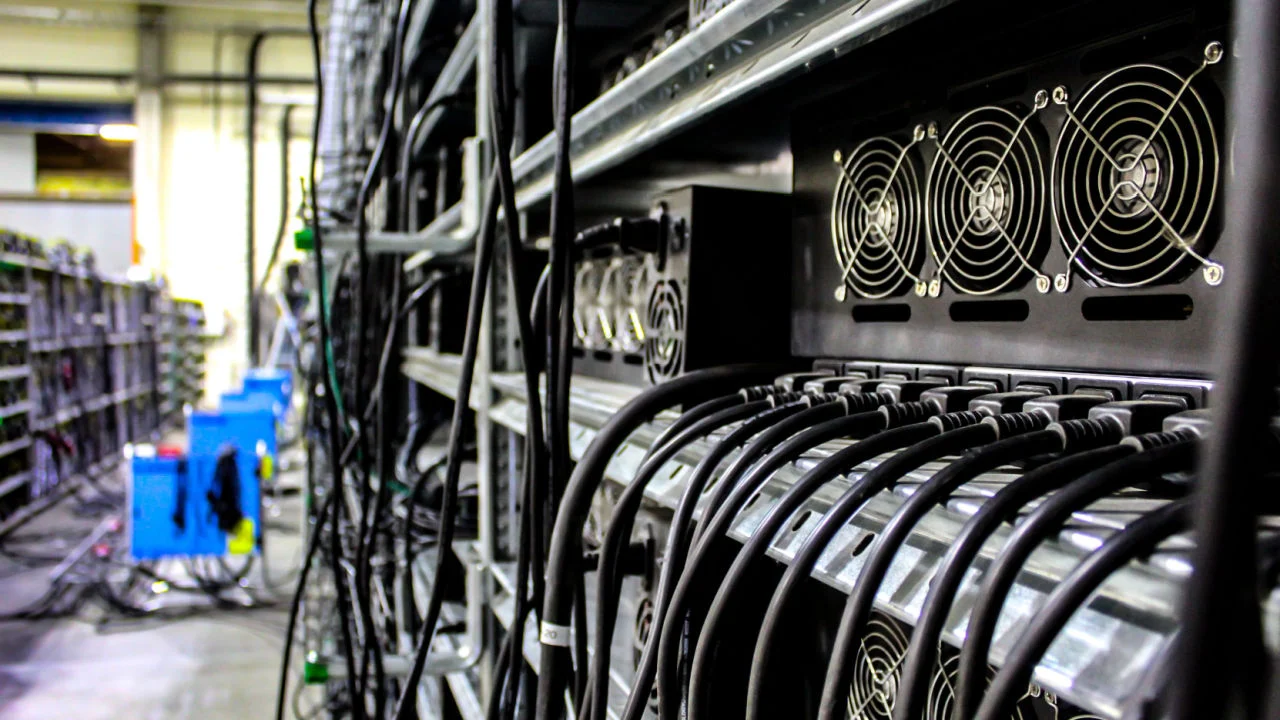
The Bitcoin mining industry entered a state of emergency on February 10, 2026, as the “hashprice”—the revenue earned per unit of computing power—plummeted to a record low of approximately thirty-five dollars per petahash. This financial strain follows a brutal market rout that has seen Bitcoin’s price drop more than fifty percent from its October 2025 peak of 126,000 dollars to the current 60,000-dollar range. For the first time since the 2022 bear market, the majority of the network is now operating “underwater,” with the average all-in production cost for a single Bitcoin estimated at 87,000 dollars. This forty-five percent gap between the cost of production and the current market value has triggered what analysts at CryptoQuant describe as a “capitulation phase,” characterized by the widespread decommissioning of older mining hardware and a sharp contraction in the network’s total hashrate. Publicly traded giants like MARA Holdings and Riot Platforms have seen their share prices collapse by more than twenty percent this week as investors flee the sector in favor of more stable “analog” assets like gold.
Environmental Volatility and the Massive 11% Difficulty Retarget
Compounding the economic misery, the North American mining heartland—particularly Texas—has been battered by a series of severe winter storms that forced industrial-scale operators to curtail their energy consumption to protect the residential grid. These mandatory power shutdowns, combined with the permanent exit of unprofitable miners, resulted in a historic eleven percent downward difficulty adjustment on February 9. While a drop in difficulty typically serves as a “safety valve” to restore profitability for those who remain online, the sheer scale of the current price decline has neutralized most of these gains. The industry’s “Miner Profit and Loss Sustainability Index” has sunk to twenty-one, a level that reflects the total exhaustion of profit margins for all but the most efficient, low-cost operators. For many firms running outdated rigs or paying more than five cents per kilowatt-hour for electricity, the recent “difficulty lifeline” is simply too little, too late to prevent a full-scale operational halt.
The Great Pivot Toward Artificial Intelligence and High Performance Computing
In a strategic shift to survive the “mining winter” of 2026, many of the largest players are aggressively repurposing their data center infrastructure to support the booming Artificial Intelligence (AI) and High-Performance Computing (HPC) markets. Firms like IREN and Core Scientific have already begun converting portions of their power capacity to host generative AI workloads, which offer much steadier, long-term revenue contracts compared to the volatile daily block rewards of the Bitcoin network. This trend has accelerated significantly in early February, with Bitfarms recently announcing a complete exit from Bitcoin mining to focus exclusively on its new AI-centric identity. By diversifying away from pure-play mining, these companies are attempting to decouple their stock performance from the “Trump Trade” reversal that has dominated the digital asset landscape. As the industry consolidates, the survivors are likely to be those who view their massive energy footprints as multi-purpose computational hubs rather than just tools for securing a single blockchain.
